Respect
When the supervisor and safety cannot agree.
How do you settle the problem without turning it into a contest over who is in charge?
Read article → L & L HEALTH AND SAFETY, LLCPRACTICAL EXPERIENCE. CONSIDERED JUDGMENT.
Safety decisions happen in real conditions, with real people. Experience helps us ask better questions—and choose an approach that fits the work.
Explore Beyond the Procedure ↗Safety professional. Operations partner.
Principal, L & L Health and Safety, LLC.
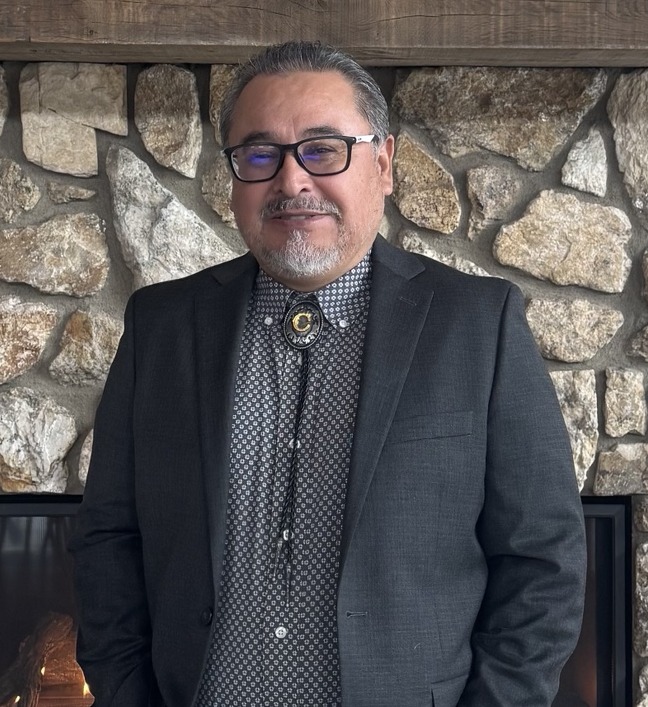
Charles Layton’s career spans more than four decades, including nearly 30 years of direct safety management experience. His background includes state government, mining and manufacturing, construction, and equipment sales and rental.
His leadership experience bridges safety, risk management, human resources, operations, and sales support. Having worked at field, regional, divisional, and corporate levels, he understands how decisions about people, equipment, production, and customer needs affect both safety and business performance.
His work with workers’ compensation and MSHA, OSHA, and DOT requirements has helped organizations reduce losses, improve operating performance, and strengthen the connection between safety and the bottom line. His approach helps leaders move beyond treating safety as a separate compliance function and make it a value reflected in everyday decisions.
Charles holds a B.S. in Occupational Safety and Health Engineering and served as an adjunct instructor at the South Dakota School of Mines & Technology from 2004 to 2007. His experience also includes continuous improvement, Lean, and 5S approaches.
He founded L & L Health and Safety, LLC in 2003 and serves as its Principal. His consulting work focuses on practical safety programs, training materials, presentations, and leadership resources that organizations can adapt to their operations.
Charles places the field supervisor at the center of a successful safety culture. He believes supervisors need clear expectations, preparation, authority, and support—and that safety professionals earn influence by understanding the work, offering useful guidance, and following through.
His approach is practical and pragmatic: respect the people doing the work, understand the circumstances, and help leaders take ownership of decisions that protect employees and support the operation. Those principles guide his book, Safety Is a Sell: Respect. Influence. Ownership., and his publication, Beyond the Procedure.
A program, presentation, or leadership guide should help somebody make a better decision. L & L Health and Safety develops practical materials around the problem you need to address, the people who will use them, and the realities of your operation.
Practical and pragmatic—from the first conversation to the finished document.

For organizations whose policies say one thing but daily management practices send another message.
Example request: “Our supervisors attend safety meetings, but accountability and corrective-action follow-through vary between locations.”
Possible deliverables: a supervisor-accountability guide; management discussion agenda; case-based leadership presentation; coaching questions; a corrective-action ownership and verification form; and a rollout message explaining expectations.
Other examples: leadership consistency, recognition, employee participation, near-miss response, introducing a new program, and helping safety professionals advise operations without taking over its responsibilities.
What makes it specific: your reporting relationships, the decisions supervisors actually control, examples of recurring difficulties, and the support leadership is prepared to provide. Materials help leaders examine and change practices; the organization owns implementation.
For businesses that need clear instructions and responsibilities rather than a manual with their name substituted on the cover.
Example request: “We have several versions of our safety manual, and the responsibilities do not match how our company operates.”
Possible deliverables: a revised manual or selected written programs; role and responsibility descriptions; procedures; job safety analysis/task hazard analysis forms; contractor-readiness documents; reporting forms; and a document-control and revision record.
Program examples: hazard communication, energy isolation, personal protective equipment, contractor safety, and incident reporting and corrective action. Scope depends on the operation and the technical input needed.
What makes it specific: your tasks, equipment, hazards, organization, current documents, and applicable requirements. Missing operational information is identified for your team to resolve; it is not filled with assumptions.
For mine operators who need plans and teaching materials connected to their operation.
Example request: “We need to revise our training plan and replace a collection of unrelated refresher presentations with a coordinated set of materials.”
Possible deliverables: Part 46 or Part 48 training-plan development or revision; lesson objectives; new miner or annual refresher materials; task-training resources; instructor outlines; presentations; exercises; knowledge-check questions; and supporting training record templates.
What makes it specific: the applicable training framework, surface or underground setting, employee roles, tasks, equipment, hazards, and the operator’s training arrangements. Each part and operation is addressed on its own terms.
Scope: remote plan and material development, with operator review and the applicable training-plan process. The engagement defines which materials and revisions are included.
For leaders and trainers who need a message people can discuss and apply.
Example request: “We need a leadership session on accountability that goes beyond telling supervisors they are responsible for safety.”
Possible deliverables: a custom slide deck; speaker or facilitator notes; an anonymized case discussion; participant handouts; small-group exercises; decision questions; and a follow-up discussion guide.
Session examples: accountability after an incident; earning credibility with operations; consistency under production pressure; turning near-miss reports into useful conversations; and employee engagement through supervisors.
What makes it specific: the audience, time available, desired decisions or capabilities, terminology, and examples drawn from your work. Presentations can be built as stand-alone sessions or supporting materials for a written program.
What is happening now? Who needs to do something differently? What is getting in the way? What documents or training already exist? Those answers help define the deliverables, needed input, review process, and scope before the work begins.
The situations supervisors and safety professionals work through every day—and practical ways to handle them.
What if safety and the supervisor disagree? What happens after the report is submitted? What do you do when the crew says it has done everything asked, but the problem is still there? These discussions start with the work and offer a useful next conversation or action.
Ten original drafts for review. Examples are illustrative. Respect, influence, and ownership guide the approach; the book’s original stories remain in the book.
How do you settle the problem without turning it into a contest over who is in charge?
Read article →“Get it done” does not supply the people, equipment, or preparation the work needs.
Read article →A supervisor has to hear the objection and still lead the crew.
Read article →A completed action is worth checking where the work actually happens.
Read article →Start with the required result before defending a preferred method.
Read article →A company-wide response should address the exposure without pretending every task is identical.
Read article →A leading-indicator report should start a useful response, not disappear into a total.
Read article →Training cannot supply missing equipment or correct a conflicting instruction.
Read article →Sometimes the field has completed the assignments and the safety problem remains.
Read article →The crew will hear the difference between an expectation their supervisor supports and a requirement to get out of the way.
Read article →No articles match. Try another word or select all themes.
These development previews show the scope of a leadership discussion package and a written accountability framework. Client materials would be tailored to the organization and reviewed with the people responsible for implementation.
Audience: Operational managers, supervisors, and safety support. Suggested format: A 30–45 minute facilitated discussion.
Scenario: A location meets its inspection and training targets, but a recurring exposure remains unresolved. Several actions have been closed after reminders, and the resource decision sits above the supervisor.
Learning objective: Distinguish completion from effective correction, identify who controls the needed decision, and define a fair expectation for supervisor and management ownership.
Possible package: Slide deck, facilitator notes, fictional review packet, role cards, participant decision worksheet, and a manager follow-up guide.
Follow-through: Each participant identifies one actual process to review through the organization’s established channels. A designated leader confirms whether the agreed support was supplied and what changed.
Purpose: Define how operational leadership, supervisors, employees, and safety support contribute to hazard recognition, decisions, and corrective-action follow-through.
Possible supporting documents: Responsibility-and-authority matrix, supervisor expectations guide, action-verification form, management meeting agenda, and implementation presentation.
Development preview, not a complete client program. Actual roles, authorities, procedures, and applicable requirements must be established for the organization.
Respect. Influence. Ownership.
Publication and purchase details to come
What does it take to earn respect, influence the people running the operation, and help safety become something they own?
Safety Is a Sell: Respect. Influence. Ownership. brings together the experiences, difficult decisions, mistakes, and lessons behind Charles Layton’s practical approach to safety leadership.
The blog explores new questions in that same spirit. The book is where the professional journey, original stories, and fuller lessons come together.
Read Beyond the Procedure ↑